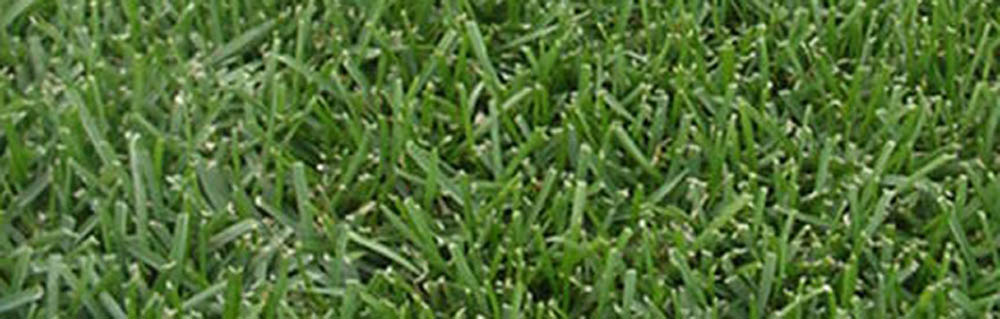
All grasses produce pollen ...
IF NON-MOWED AND ALLOWED TO FLOWER AND
BLOOM OUT.
If the grass lawn is maintained and
mowed on a regular basis, you don’t see
blooms (thus no pollen produced) and you
don’t have allergy issues because of the
grass. Thus to avoid pollen you must do
too things:
(1)
Keep the grass properly watered and
fertilized and healthy (free of
diseases & bugs). - Doing this
keeps the grass from becoming under
stress. Stress can make the
plant want to reproduce (natures way
of ensuring species survival.
(2)
Keep the grass mowed regular so as
to NOT allow the grass time to
produce and send up seed heads.
Mowing frequency depends on
maintenance height. The lower
you mow, generally the more frequent
you will have to mow again.
Mowing frequency for most grasses is
in the 5 to 7 day period. Some
grass varieties can go longer
between mowing. Site variables
and usage also can affect mowing
frequency. For instance most golf
courses mow green height grasses
every day! - some even mow twice a
day / 7 days a week.
All pollen producing grasses can
affect someone, although not everyone is
allergic to every type of grass –
someone is more allergic to bluegrass,
someone else (me) is more allergic to
Bermudagrass. But then Bluegrass
does not effect me, but someone else is
deadly allergic to ryegrass and fescues
while the others do not effect them –
ETC. Thus different species of
grasses may affect different people.
Very rarely is anyone allergic to the
grass itself, the leaves and stems or
even the proteins in the leaves – they
are usually just allergic to the pollen
if the flowers are allowed to grow up
and bloom. The only way to have a
truly pollen-free lawn is to keep it
mowed or plant a sterile grass such as
one of the sodded, non-seeded Tif
Bermudagrass varieties such as Tifway
419
www.lawnplugs.com
.
MOST ALLERGIES caused during
mowing of grass are actually NOT caused
by the grass or its own flowers. A
grass lawn acts as a filter and traps
molds, dander, dust, pollutants, pollen
(trees, shrubs, neighbors’ unmowed
grass, wind blown pollen, flowers,
weeds, etc.) and all this trapped junk
is stirred up during mowing and causes
people to have allergic attacks.
SAFER MOWING
Recommended solution is to water the
lawn the day BEFORE you mow – watering
for a short period washes the trapped
particles off the leaves and down to the
soil and they can usually stick there
and not get stirred into the air the
next day when the grass is dry and you
mow it. This generally Works very
well.
Best Seeded
Bermudas for Sunny Lawns
YUKON
and
PRINCESS are best choices in
seeded varieties IF you are capable of
correct maintenance and mowing frequency
to reduce pollen production.
Best Sod (Hybrid /
Vegetative) Types
In a Sod Type most of the Hybrids work
well.
Tifway 419 is one of the more popular
varieties.
| Bermudagrass.com
- For All Bermuda Grass Seed Needs |
|
READ MORE ABOUT
SEED
HEADS & POLLEN ISSUES
|
Bermudagrass.com
Growing
a beautiful tomorrow!® |
|