|
NOTE: You have reached an information page.
To view
product prices visit our store at
Seedland.com |
|

ORDER
ONLINE |
PHONE ORDERS:
PHONE
Phone Business hours - Mon-Fri. 9-5 EST ONLY - Contact via
Email
 |
|
|
|
IMPORTANT
REGULAR CHEYENNE NOTE:
Cheyenne Bermuda seed will NOT be available
for sale for the 2008 season. Due to limited
production of this variety by Pennington Seed this year...
Cheyenne Bermuda will not be available as an individual
variety sold by Seedland for the 2007 year. Weather
issues created an extremely short crop of Cheyenne resulting
in the decision by Pennington to only use this variety in
their Ranchero Frio mixture.
All of the Cheyenne seeds available
have been blended into the Ranchero Frio Bermuda Blend.
We would highly recommend the
Ranchero Frio as a replacement choice for Cheyenne. In
2008 a very limited amount of the newer Cheyenne II will be available.
|
|
|
|

|
CHEYENNE
Improved Forage-Type
Bermudagrass
This grass is for pasture grass use for grazing and for hay
production.
Safe for horses and cattle!
(Generally not used for turf)
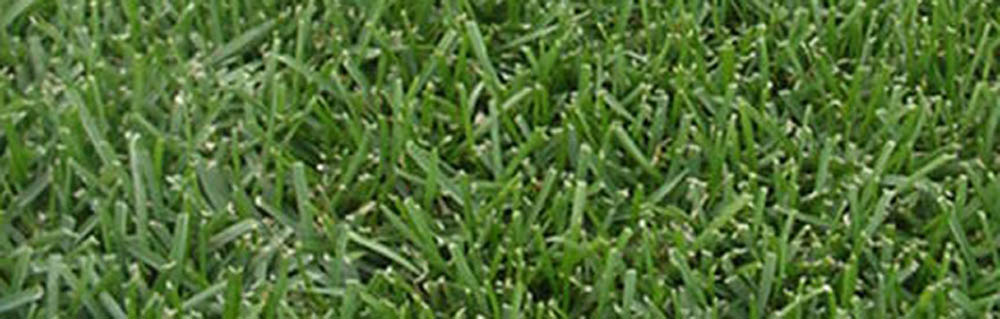
Cheyenne Bermuda
picture left and below
click for larger picture!
IMPORTANT NOTE:
READ TESTIMONIALS OF ACTUAL
SUCCESS STORIES PLANTING &
USING CHEYENNE BERMUDA. |
CHEYENNE NUTRITIONAL
QUALITY*:
* Nutritional quality can be affected by management practices and
environmental conditions, including fertilization rates.
Protein is generally higher with higher N applications.
- Crude Protein: 8 to 13%
- TDN: 50 to 55%
- NDF: 58 to 66%
- ADF: 29 to 40%
NOTE: A new
variety of Cheyenne is coming soon!
Cheyenne II is expected to be available
for sale in 2008.
|
UNIVERSITY
COMPARISON DATA
(From trials in Texas, Okalahoma & Virginia)
CHEYENNE TEST DATA
Read comments about
the Ranchero Frio
blend.
|
 |
- Produces a more palatable leafy forage and hay.
- Good cold and heat tolerance. - With proper fall management
will survive in cooler climates.
- Easy to Establish from seed - Drill or Broadcast.
- Economical Alternative to sprigging.
| Bermudagrass.com
- Seeding Cheyenne |
SEEDING RATES:
Drill or Broadcast Rate:
15 lbs. per acre.
NOTE:
Cheyenne seed production is in limited supply
and seeds may not be currently available at certain times due
to high demand. |
CLICK TO
BUY
BERMUDA
AT OUR STORE
OR TO VIEW PRICES
|
Other choices? Ranchero
Frio is a Blend of Cheyenne & Giant....
 |
Cheyenne Bermudagrass is a five clone
synthetic variety developed by Judy Brede for Pennington Seed,
Inc. It originates from plants selected for their cold
tolerance and vigorous growth habit. Cheyenne establishes rapidly
and can provide cover in 45 to 60 days under desirable growing
conditions. |
Cheyenne was one of the highest yielding
varieties in a test of forage Bermudagrass varieties conducted
in Athens and Calhoun Georgia, producing over 7.5 to 8 tons per
acre of hay. This rate of production is comparable to sprig
planted Russell Bermudagrass. Cheyenne is as cold hardy as
Coastal Bermudagrass and more cold tolerant than Tifton 85.
It can be planted in transition zone states such as Arkansas,
Kansas, Missouri, Oklahoma and Tennessee as well as the
traditional Bermudagrass growing areas of the Southern United
States.
NUTRITIONAL
INFORMATION
Crude Protein of 8 to
13% and TDN of 50 to 55%
*Nutritional quality can be
affected by management practices
and environmental conditions.
Plant in spring after danger of frost is
over, (usually when temps are 70+ degrees) until mi-summer
(April to July in most areas). Allow grass to grow up to 10
inches before the first hay harvest or grazing so as to allow for
establishment of the plants. - Plant no deeper than 1/4 inch
in a well prepared, firm seedbed. Check pH... should be at
least 6.0 for best results. If crabgrass becomes a problem,
mow or graze to control.
Cheyenne can be overseeded with cool
season annual grasses or legumes (clover, ryegrass, wheat, oats or
rye.). Be sure to graze or harvest excess growth from cool
season grasses or legumes by April so as to allow Cheyenne to
green up in the spring.
HAY FORAGE PRODUCTION:
Cut hay at 4-5 week intervals or adjust stocking rates to maintain
2-3 inches of growth.
PLANTING INFO:
(1) Soil test and follow recommendations. Apply
lime to raise the pH to at least 6.0.
(2) Prepare a firm level seedbed by disc harrowing and cultipacking.
A good rule of thumb is that your hell should leave no more than a
1/8" impression in the soil when you walk across the field
before planting.
(3) Plant Cheyenne bermudagrass no deeper than 1/4" at 15
pounds per acre broadcast or drilled. Broadcast and
cultipacked into the soil is the preferred method for most soil
types.
(4) Seed should be planted in the spring, after all danger of frost
is over. The minimum soil temp should be at least 65
degrees. Planting can be done from spring until midsummer.
(Generally this is mid April to early July in most areas). In
cooler climates proper fertilization with Nitrogen helps in
establishing for winter survival. The key to establishment of
Bermudas is getting it to survive the first winter season.
After the first winter survival rates go up considerably.
(5) Allow grass to grow up to 10 inches high before taking the first
hay cutting or grazing the first time. (This allows for maturity of
the plant and for the roots to firmly establish).
(6) If crabgrass becomes a problem, mow or graze to control.
Read
more planting tips in Pennington's
Guide to
Seeding Forage Bermudas
(Word Doc.)
MANAGEMENT GUIDE:
(1) Soil test each year in late summer. Apply a
fall application of phosphorus, potassium and lime according to soil
test recommendations. Also apply 30 to 50 pounds of Nitrogen
per acre six weeks prior to the date of the the historic first
frost.
(2) Apply 50 to 75 pounds of nitrogen per acre after each hay
harvest or split apply 150 pounds of nitrogen in the spring, early
summer and late summer when grazing.
(3) Cut for hay at 4 to 5 week intervals or adjust stocking rate to
maintain 2 to 3 inches of growth.
(4) If management intensive grazing is used, allow 2 to 3 weeks rest
between grazing periods, depending on forage availability.
(5) Cheyenne can be overseeded with cool season annual grasses or
legumes (clover, ryegrass, wheat, oats, or rye). Be sure to
graze or harvest excess growth from cool season forages by April
(spring time) to enable the Cheyenne bermudagrass to green-up in the
spring. This keeps the annuals/legumes from creating a
competitive or shade problem.
Cheyenne Brochure -
Pennington Seed PDF.
|
CHEYENNE
BERMUDA
TESTIMONIALS |
|
Mr. Phill
Robinson - Keller, TX
“I planted 20 acres of Cheyenne May
15,
2004, and it came up super thick. My
first
cutting was 6 weeks after planting
and it
yielded 43 round bales averaging
1500 lbs/bale. I will plant more
because it
is dependable and furnishes at least
if not
more forage than sprigged
varieties.” |
 |
|
Mr. Charles
Loggins - Peaster, TX
“I tried sprigging
and never could get a stand.
With Cheyenne not only did I get a
stand the
first time, I was able to graze it
in 4 weeks. At
that time it was 4” to 6” tall. From
June 1,
2004, to Sept 1, 2004, I continually
grazed at
1AU/A. Two weeks after pulling the
livestock
off, I harvested five 1500 lb.
bales/acre.” |
 |
|
Mr. George
Tuchings - Henderson, TX
“I renovated an 11
acre Bahia field with Cheyenne.
During the best year my Bahia field
yielded 28 rolls
of hay/year and my first year with
Cheyenne the
field yielded 57 rolls of hay. In
fact the first cutting
yielded 15 rolls. I got three hay
cuttings the first year
which is far more than you could get
out of sprigs.
Planting Cheyenne reduced my
establishment cost
by $75/A over sprigs. Within 2 weeks
of germination
I had a solid stand of grass. I
could do everything
myself and did not have to depend on
anyone else
and that also saved me time and
money.” |
 |
|
Dr. Darrell
Meadows DVM - Kaufman, TX
“I planted Cheyenne
April 15, 2004. It came up in 2
weeks and the first hay cutting was
taken 3 weeks after
germination (26 square bales/acre
1560 lbs). Hay from
this field was second overall in
Kaufman Co. hay show.
I’ll never sprig again. If you plant
Cheyenne properly it
will perform quicker and more
vigorous than sprigs. It
went through the heat of summer very
well and the
stand looks healthy.” |
 |
|
Mr. Ronald
Schneider - Riesel, TX
“Cheyenne is fast
growing (germination in 7 –
10 days) and the most prolific grass
I’ve ever
planted from seed. As it spreads it
also grows
up at the same time. I was grazing
in just 30
days after germination.” It
furnishes a tremendous
amount of forage quickly. Compared
to
Jiggs and Tifton 85, Cheyenne has a
finer leaf
and stem plus it furnishes grazing
at least 5
weeks faster.” |
 |
|
Mr. Doyle
Templeton - Jasper, TX
“On newly cleared
ground Cheyenne gave me
grazing quick and I did not have to
baby it. My
animals choose it over Alicia
because of its
finer stems and leaf and it is
highly digestible.” |
 |
|
Bermudagrass.com
Growing
a beautiful tomorrow!® |
|
|