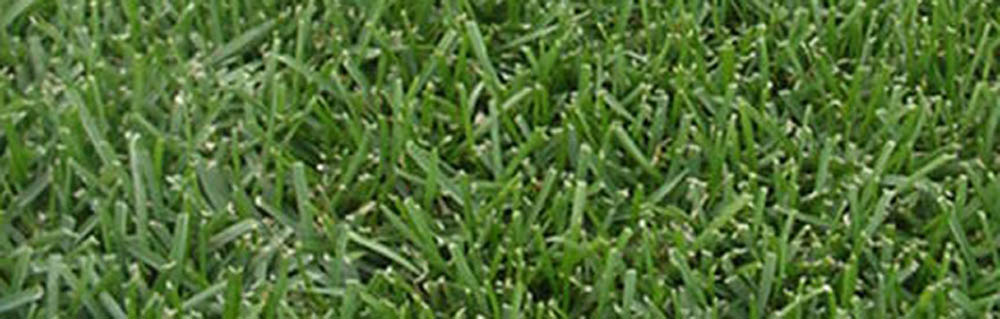
Common Bermuda grass was originally grown for pasturage
and imported for that use. Common Bermuda stands have higher nutritional value
than the other warmer season grasses grown in the U.S. and with proper fertilization and
soil additives are still maintaining their hold on the forage scene. The improvement and
hybridization of the Bermuda grasses over the years has led to increases forage potential
and outstanding qualities for each new variety with extensive use
for hay production in particular.
| Bermudagrass
- Coastal Bermuda
(SPRIGGED ONLY) |
Bermudagrass Varieties for
Top Quality and Forage Yields:
http://edis.ifas.ufl.edu/DS081
The next step up from the
common is the coastal Bermuda which was developed in Georgia and became so popular that
the acreage for this variety is still the highest in the southern states at this time. It
far outperforms any of the other warm season grasses presently planted. Newer and even
better improvements have been made in cultivars now available for new pasture planting and
updating older stands that might have been killed out through disease or temperature
damage. Many are hardier to cooler temperatures, have faster growth, better palatability,
earlier greening in the spring. The various varietal improvements still retain the original tenacity
for growth, drought resistant qualities, and the thick dense sod for which Bermuda is well
known.
Newer pastures are being established in the improved
varieties which are usually sprigged instead of seeded. Low acid soils with a pH lower than
5.5 can grow Bermuda but the addition of lime can make the production value much better.
Most of the newer varieties for haying and forage are from vegetative sources. They are
high in nutrition and fast growing on a variety of soils from sandy to clays of low
fertility. Most soils must be limed to derive the most benefit from Bermuda plantings.
Although drought tolerant it responds well to irrigation and
better fertilization is needed for haying purposes. For small well managed horse pastures
the newer Bermudas will provide the high rate of forage that a horse needs daily and
covers the ground thick enough to keep down the weeds and ingested dirt horses so often
consume when grazing pastures to close. As with all forages the best practice will be in
establishing rotational grazing areas to cut down on overgrazing and better sod formation
for the constant traffic of the livestock. In many areas of the south the grass can remain
green year round. Bermuda can readily take over a stand of other grasses or legumes and
pure stands have to be watched for invasion of another neighboring variety.
The more common
Bermudas take less fertilizer than many other forage grasses and
are easily maintained
without a lot of work on a managers part. This grass is often more disease and insect
resistant than some of the more improved varieties that are grown vegetatively.
This doesn't apply to all varieties as some do have disease
and insect improvements. Most vegetative pasture varieties are still sprigged or disked in from cuttings.
They become excellent producers of hay and forage material when properly managed.
| Bermudagrass
- Additional Pasture
Maintenance. |
Adapted to the tropical and sub-tropical regions
of the world and in the U.S. in the mid to lower south and from the East Coast into Texas.
Bermuda grows best in soils of 5.6 to 6.2 and with soils that are of low to medium
fertility. These grasses can withstand drought and colder conditions by going into
dormancy and returning with the climate changes.
Seeding can be done with common Bermuda grass and germinates at high
temperatures as soon as the soil reaches about 80 degrees. Seeded at the rate of 5-10 lb.
per acre for the hulled seed and at 10-15 lb. per acre for the unhulled. Planting can be
done April 15 though May the 30th. Some seeders can broadcast, seed and pack at
one time saving time and keeping the soil from loosing too much moisture.
Improved coated seeds are generally planted at 10 lbs. acre rates.
Establishment of Bermuda grass can be through seeding of the common Bermuda and
sprigging is the best method for the establishment of hybrid improved pastures. The
vegetative sprigs are cut through haying and thrown out ahead of disking and lightly cut
into the soil and cultipacked immediately or the sprigs are removed by cuttings from the
source with roots attached and are then planted by a sprigging machine in rows or
broadcast and disked into the soil (lightly) with the tips above the soil line. Row
sprigging will result in using far less of the vegetation and still result in a full even
distribution and compact growth.
Maintenance requirements are fairly low for the Bermuda grasses with the
emphasis being of soil testing and additions of fertilizer, lime and trace minerals that
might be needed. Cuttings for hay and silage will of course have to be done according to
schedule with fertilization following. Although Bermuda grasses are drought tolerant
irrigation will go a long way in the dryer seasons toward full productivity. Occasionally
old stands will need new growth added because of disease or weather factors. Also
see our maintenance page for more practices.
Pests that can invade Bermuda grasses are chinch bugs, mole crickets, and
spider mites and army worms.
Diseases that may injure Bermuda grasses are rust disease
Weeds are generally not a problem except in the seedling stage and applications
of herbicides for the broadleaf plants can be applied according to the instructions as
soon as the grass is planted. Bermuda grasses are too aggressive and thick growing weeds
rarely have a chance to invade their space and the taller variety shade out most of the
weed sunlight. If there is a problem early mowing in the spring should help alleviate the
weeds from seeding and spreading for the next year. Bahiagrass
is a weed in a Bermuda hay field. Chemicals are available to
help in control the Bahia.
Watering Bermuda grass if it is available can only add to the production and
even though Bermuda is drought tolerant in years of good seasonal rains and good
fertilization it will increase the productivity especially when the purpose is for hay and
silage production.
| Bermudagrass
- Pasture Varieties |
Russell is one of the newer varieties of Bermudas
for the forage industry. The major advantage of this variety is that it can green earlier
and provide forage ahead of the time it takes the others to come out of dormancy. The
Russell variety must be sprigged in the spring and will produce by late summer.
Other Varieties are: (Also visit our Bermuda variety page)
- Coastal is the older variety of the Bermudas and is high in protein has more leaf growth
than the common Bermuda.
- Tifton 85
- Tifton 44 has a better hardiness to cooler weather.
- Tifton 78 is a high quality forage producer.
- Florakirk Bermuda has a high yield and digestibility and more cold hardy than many
others do.
- Coastcross
- Past Rico - Seeded variety
- Ranchero Frio, Cheyenne & Wrangler - Improved seeded varieties.
- Grazer
- Lancaster
- Common Bermuda is native to all the tropical and sub-tropical locals of the world.
Planted by seed.
|
Bermudagrass.com
Growing
a beautiful tomorrow!® |